
Content
 Home Home |
| About SpinWatch |
| Blogs |
| Reviews |
Updates
Stay informed about Spinwatch's news and campaigns.Information
| Articles By Category |
| Most Popular Articles |
| Book Shop |
| News Feeds |
| Video |
| Links |
| Donations |
| Whistleblowers |
Whistleblower
Or have you got a story on the PR industry?
Call the spinbusting hotline:
+44 (0)7973 424 015
or Email: whistleblower
| British Propaganda in Ireland and its significance today |
 |
 |
 |
|
David Miller, 24 March 2006
British propagandists were shy, diffident, reluctant, seeing propaganda as not quite the done thing. They developed a restrained kind of 'propaganda lite', mainly based on truth, with deception only as a last resort, the British 'sense of fair play'. Their response in other words was 'typically British'.[1] Such at least is the picture painted by mainstream historians. Brian Murphy's meticulous reconstruction of the propaganda war in Ireland in 1920 drives a coach and horses through the comforting and elite-sustaining version of history propounded by mainstream historians. Murphy's work shows that the mainstream view is itself effective propaganda, transmitted down the generations by historians who do not look closely enough at the available source documents, blinded by ideological filters and the demands of great power. Britain far from being a follower in the development of propaganda is a leader in the field. The British were active long before the most often acknowledged starting point of the 1914-18 war, as some of those involved in British propaganda today are willing to admit. The 15 (UK) Psychological Operations Group division traces its history to the Boer war, though they naturally find it necessary to claim that they were at the 'receiving end' of the Boers psyops first.[2] But Murphy shows that the British were pioneers in propaganda and that they took to it with enthusiasm. He also shows how the standard account of British fair play is entirely wrong. In Dublin in 1920 the propaganda apparatus pumped out entirely false and deliberately misleading stories. 'Propaganda by news' was how they described it. The key quality that it must havem according to Basil Clarke who was in charge of the operation, was 'verisimilitude' - having the air of truth. According to his own account the routine 'issue of news gives us a hold over the press'. At the twice-daily press briefing at Dublin Castle, journalists 'take our version of the facts' and they believe all I tell them', wrote Clarke. The service 'must look true and it must look complete and candid or its "credit" is gone'. The policy, therefore was to disseminate lies and half truths which gave the appearance of truth. As Major Street, another of the propagandists noted: 'in order that it may be rendered capable of being swallowed', propaganda 'must be dissolved in some fluid which the patient will readily assimilate'. Contaminating The historical record The use of some of these propaganda documents as genuine historical sources by pro-British historians, as exposed by Murphy, is a testament to the power of propaganda as well as of the extent to which official historians are capable of fabricating history in the interests of great power. Unfortunately for those historians who have made their living trotting out history which allows the powerful of today to rest easy, Murphy's research exposes to the light the dubious empirical basis of some of their work. Murphy is one actor in the vigorous historical debate on the Rising and the War of Independence. The 'revisionist' school has tried to bury the achievement of the struggle for Irish independence. Ireland was the first British colony to throw off the shackles of British rule. It was the culmination of a long struggle carried out in the last instance by an armed revolution after the British state had emphatically rejected the overwhelming majority for independence at the 1918 election. The revisionists instead want contemporary elites in Ireland, Britain and elsewhere to be allowed to paint the Irish revolution as a dirty sectarian affair springing out of the special ethnic hatreds so well incubated by the Catholic Irish.[3] Murphy undermines this lie by showing the process by which these historical accounts emerged in the propaganda dens of some of the most vicious British imperialists and racists. Murphy quotes one of the more restrained propagandists, Major John Street, who had conducted propaganda in the 1914-18 war as saying 'the IRA rank and file' were 'poor dupes of the designing criminals who pose as their officers'. His views are positively civilised besides those of his colleague Hugh Pollard, who hated the Irish with a passion. 'The Irish problem is a problem of the Irish race, and it is rooted in the racial characteristics of the people themselves' wrote Pollard in 1922. The Irish he thought were 'racially disposed to crime', have 'two psychical and fundamental abnormalities' moral insensibility and want of foresight' which 'are the basic characteristic of criminal psychology'. Furthermore, noted Street, warming to his theme 'the Irish demand for an independent Irish Republic is a purely hysterical manifestation'. Pollard, Street and Clarke also worked closely with the head of Special Branch in London, Basil Thomson. Through him they were connected to the key imperialist lobby networks in London. These individuals were not abashed about their politics, describing their network as the 'diehards' and the 'London Imperialists'. Central to it and very close to Thomson was Admiral Reggie 'Blinker' Hall, who was the director of Naval Intelligence in the 1914-18 war. Together with Thomson, Hall interrogated Roger Casement in 1916 and personally leaked his 'black diaries' to the press in order to ensure that Casement would not be reprieved as a result of the campaign being run by Arthur Conan Doyle. According to historians of the period, Hall's victory in ensuring Casement was hanged, 'was all very gratifying; an object lesson in secret service power which Hall was never to forget'.[4] The Rise Of Public Relations This was the milieu which produced the public relations industry in Britain. Its lineage can be traced right through to the rise of Thatcher in the 1970s. Clarke left government service in the early 1920s and set up one of the first PR agencies: Editorial Services. By the end of the 1920s this was a significant operation with 60 staff. During this period (1929-31) Clarke worked as an early PR man for the Conservative Party.[5] A year before Clarke was posted to Ireland, Hall, by then a newly elected MP, convened the meeting which led to the creation of 'national propaganda': the first business-wide propaganda group in Britain in 1919. It engaged in very similar techniques to the British propaganda operation in Ireland. Amongst the tactics were the hiring of former 'black and tans' from the Irish conflict to conduct what they called a 'crusade for capitalism'. This involved propaganda, intrigue, subversion and violence, taking the fight to the factory gates all over the UK from 1920 right through to the 1950s and 60s. Today National Propaganda is better known by the name it adopted in 1924, as an organisation which blacklisted workers for its big business clients. For at least half of its history until its dissolution in the 1990s, the Economic League's primary role was propaganda.[6] Colonel Hugh Pollard, as he became, turned up again in 'diehard' circles in 1936 when he flew from Croydon airport on a Dragon Rapide light aircraft to the Canary islands. They brought General Francisco Franco back to Spain to launch his murderous coup against democratic Spain. Accompanying him was one of the leading lobbyists, and an early Conservative party spin doctor, of the post-1945 period, Toby O'Brien.[7] In other words the link between what happened in Ireland in 1920 and in Britain afterwards is real and direct, featuring the same people, linked over the generations by a shared hostility to democratic politics. Linked also to the rise of the spin industry which is now an attendant feature of every political controversy and which uses and develops techniques intended to ensure that democratic politics cannot function effectively to implement the will of the people. This is a long and involved story, but the work of Brian Murphy has a lot to teach us about its origins. Dublin, Belfast, Iraq And Beyond But there is another connection which Murphy's work highlights. 'The fools, the fools. They have left us our Fenian dead' said Padraig Pearse, in 1915, 'and while Ireland holds these graves, Ireland unfree shall never be at peace.' The prophetic significance of this statement echoed down the years as the British army was deployed back to the streets of Ireland in 1969. 1968 had been the only year in the post 1945 period when British troops had not seen active service in defence of British imperialism. The army brought with it to Belfast and Derry the experiences learned in the colonial counter-insurgency campaigns of 1945-1967 - 63 of them according to the Ministry of Defence - all across the globe from Greece and Palestine in the 1940s to Malaya, Aden and Kenya in the 1950s and 60s. The use of terror, torture, selective assassination, and covert propaganda were all put into practice. Murphy shows that some of the techniques had a longer history. When the torture and humiliation at Abu Graibh, and across Iraq, Afghanistan and at Guantanamo, was revealed, the gruesome treatment of detainees horrified many. The Pentagon spun the evidence presented in the photos as poorly trained troopsówhite trash- out of control and it put Lyndie England on trial. But a straw in the wind came from Gerry Adams, the Sinn Fein MP for West Belfast. Adams wrote in the Guardian that, when he had been detained in the early 1970s, as well as the torture : 'Some were stripped naked, they were beaten with batons and fists on the testicles and kidneys and kicked between the legs. Radiators and electric fires were placed under them as they were stretched over benches. Arms were twisted, fingers were twisted, ribs were pummelled, objects were shoved up the anus, they were burned with matches and treated to games of Russian roulette. Some of them were taken up in helicopters and flung out, thinking that they were high in the sky when they were only five or six feet off the ground. All the time they were hooded, handcuffed and subjected to a high-pitched unrelenting noise. During this process some of them were photographed in the nude.'[8] Some years later Adams was arrested and beaten again. Before being released:
Seymour Hersh and Jon Ronson separately revealed that the photos from Abu Graibh were not so much records of torture as implements of torture. This was a psyops programme codenamed 'Copper green' which instructed the US grunts to take the photos so they could be used as part of the process of trying to break the prisoners in interrogation.[9] The use of torture and psyops as a means to break morale is a well tried tactic in the armory of the propagandist. It shows that propaganda is not simply a matter of persuasion and winning the battle of ideas, but also of coercion, intimidation and violence: In a word 'terror'. This philosophy deployed today in Iraq and Afghanistan was familiar to the British propagandists of 1920. As Major Street expounded their approach:
 One
of Murphy's most extraordinary revelations is that the techniques,
which shocked the world in Abu Graibh, have a history longer than
perhaps anyone outside the military and their political masters has
suspected.He quotes the records of the torture of Tom Hales and Patrick
Harte who were viciously attacked, kicked, punched, hit with revolver
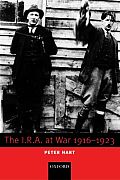
butts and tortured with pincers. They were threatened in a mock execution. As Murphy notes 'attempts were made to humiliate them by making them hold the Union Jack and photographs were taken of Harte with the flag held loosely in his hand'. These photographs still exist, and in a telling aside Murphy simply notes that it is one of these torture photos which adorns the front cover of revisionist historian Peter Hart's book, The IRA at War 1916-1923 (2003), the main thesis of which condemns those who fought British rule.[10] One
of Murphy's most extraordinary revelations is that the techniques,
which shocked the world in Abu Graibh, have a history longer than
perhaps anyone outside the military and their political masters has
suspected.He quotes the records of the torture of Tom Hales and Patrick
Harte who were viciously attacked, kicked, punched, hit with revolver
butts and tortured with pincers. They were threatened in a mock execution. As Murphy notes 'attempts were made to humiliate them by making them hold the Union Jack and photographs were taken of Harte with the flag held loosely in his hand'. These photographs still exist, and in a telling aside Murphy simply notes that it is one of these torture photos which adorns the front cover of revisionist historian Peter Hart's book, The IRA at War 1916-1923 (2003), the main thesis of which condemns those who fought British rule.[10]
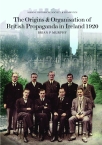
Ireland Today The history of intelligence and propaganda manipulations in Ireland is not in the past. The current malaise in the north of Ireland bears all the signs of covert manipulations by the intelligence and security services. The fledgling institutions of democracy in the North were suspended directly on the back of the alleged discovery of an 'IRA spy ring' in October 2002. After tipping off the media Special Branch officers raided Sinn Fein offices inside Stormont (which houses the parliament and the civil service headquarters), taking away a couple of computer disks. In fact, there were no incriminating documents in the Sinn Fein offices, but the police claimed that they found some at the home of Denis Donaldson, Sinn Fein's head of administration at Stormont.[11] The long-delayed prosecution against him collapsed in December 2005, when it became known that he had been a paid British Intelligence informant for over 20 years. In which case the actions of the Special Branch begin to take on a different hue. Was this a case of lack of communication between elements of the security services or, more likely give past experience, an indication of deep splits within the intelligence establishment, known for its dislike of democratic decision making?[12] On the basis of security manipulations, which look as if they are borne of the internal disputes in the intelligence and security agencies, we have seen what amounts to a 'securocrat' coup in the North. Institutions of direct democracy have been suspended by the British government as a result of Special Branch and spook manipulations. As a result we have the continuation of direct colonial rule by the British Government, who seem to have rowed furiously back on the promises made at the time of the Good Friday Agreement. There could hardly be a better illustration for hard-pressed Irish nationalists of the nature of perfidious Albion. The story of British propaganda in Ireland in 1920 tells us of the obvious parallels between Ireland in 1920, 1971 and 2005 and between Ireland then and Iraq today. It suggests that there is a real need for a comprehensive re-examination of this development of British propaganda and for revisionist historians to start looking over their shoulders as evidence of the contamination of their work with propaganda is uncovered, as historical spin is unspun. Brian Murphy has provided us with a fascinating piece of a much wider jigsaw. Notes The book "The origins & Organisation of British Propaganda in Ireland 1920" is available at a special price of only £4.00 plus P&P, from the spinwatch bookshop. [1] See for example P. Taylor and M.L. Sanders British Propaganda during the First World War, Basingstoke: Macmillan, 1982; P Taylor, The Projection of Britain: British Overseas Publicity and Propaganda 1919-1939 Cambridge: Cambridge University Press, 1981; P. Taylor, British Propaganda in the 20th Century: Selling Democracy, Edinburgh: Edinburgh University Press, 1999. [2] 'History - British PSYOPS' http://www.army.mod.uk/15psyops/history_british_psyops.htm [3] For a discussion of the inability of mainstream academia to take on empirically based independent line on Northern Ireland see D. Miller (1998) 'Colonialism and academic interpretations of Northern Ireland' in Miller, D. (ed.) Rethinking Northern Ireland, London: Longman. For a discussion of revisionism more generally see Ciaran Brady (Ed.) Interpreting Irish History: The Debate on Historical Revisionism, 1938-94, Dublin: Irish Academic Press, 1994. [4] Bernard Porter, Plots and Paranoia: A history of political espionage in Britain, 1790-1988, p141 [5] Alan Clarke 'The life and times of Sir Basil Clarke, PR Pioneer', Public Relations, 1969 Vol 22(2) p. 9-13. [6] The best existing account is Mike Hughes Spies at Work, 1 in 12 publications, 1994. http://www.1in12.go-legend.net/publications/library/spies/spies.htm [7] Graham Turner and John Pearson, The Persuasion Industry, London: Eyre and Spottiswoode, 1966 p. 177. [8] Gerry Adams 'I have been in torture photos, too: The Abu Ghraib images are all too familiar to Irish republicans' The Guardian Saturday June 5, 2004 http://www.guardian.co.uk/Northern_Ireland/Story/0,2763,1232058,00.html [9] Seymour Hersh, 'The Gray Zone: How a secret Pentagon program came to Abu Ghraib', New Yorker, Issue of 2004-05-24. http://www.newyorker.com/fact/content/?040524fa_fact; Jon Ronson, The Men Who Stare at Goats, London: Picador, 2005. http://www.jonronson.com/goats_04.html [10] A vigorous debate on The questionable and selective approach of Peter Hart can be found in History Ireland 2005 Vol 13, Nos 2 to 5 http://www.historyireland.com/magazine/features/featlist.html ; in Meda Ryan's Tom Barry IRA Freedom Fighter (2003), in Indymedia.ie and in the Irish Political Review. [11] Vincent Browne, 'Treachery: Evidence that the British sabotaged Irish constitutional settlement.' The Village, Thursday, December 22, 2005. http://www.villagemagazine.ie/article.asp?sid=1&sud=37&aid=985 [12] For a discussion of the rivalry thesis see Steve James and Chris Marsden, 'Northern Ireland: the Donaldson affair and the threat to democratic rights' World Socialist Website, 19 January 2006. http://www.wsws.org/articles/2006/jan2006/irel-j19_prn.shtml
|

Share


Featured Book

Latest Blogs
Reviews
- An ‘amazing coincidence’ that ‘could mean anything’: Gerard Murphy’s The Year of Disappearances
- Rise of the Flexians
- Newspeak in the 21st Century by David Edwards and David Cromwell (Media Lens)
- The Darfur Deception
- Miners' strike anniversary: Freedom of Information exposes Margaret Thatcher's secrets